.svg)
Close



Creative Thinking as a Core Way of Understanding the World
At Harper, art is not treated as an optional add-on or a separate track for a small group of students. It is understood as an essential part of how students learn to observe, interpret, express, and respond to complexity.
Harper’s approach to art begins with a broader educational belief: creativity is not only for future artists. It is one of the most powerful ways students learn to understand the world, build perspective, and develop the confidence to express ideas with clarity and originality.
This is why art at Harper is positioned as part of the core educational structure rather than as a side programme. Whether a student ultimately moves toward art and design, or toward science, engineering, business, or the social sciences, creative thinking strengthens their ability to work with complexity, develop judgement, and communicate meaningfully.

Art as a Cognitive Tool, Not Just a Skill Area
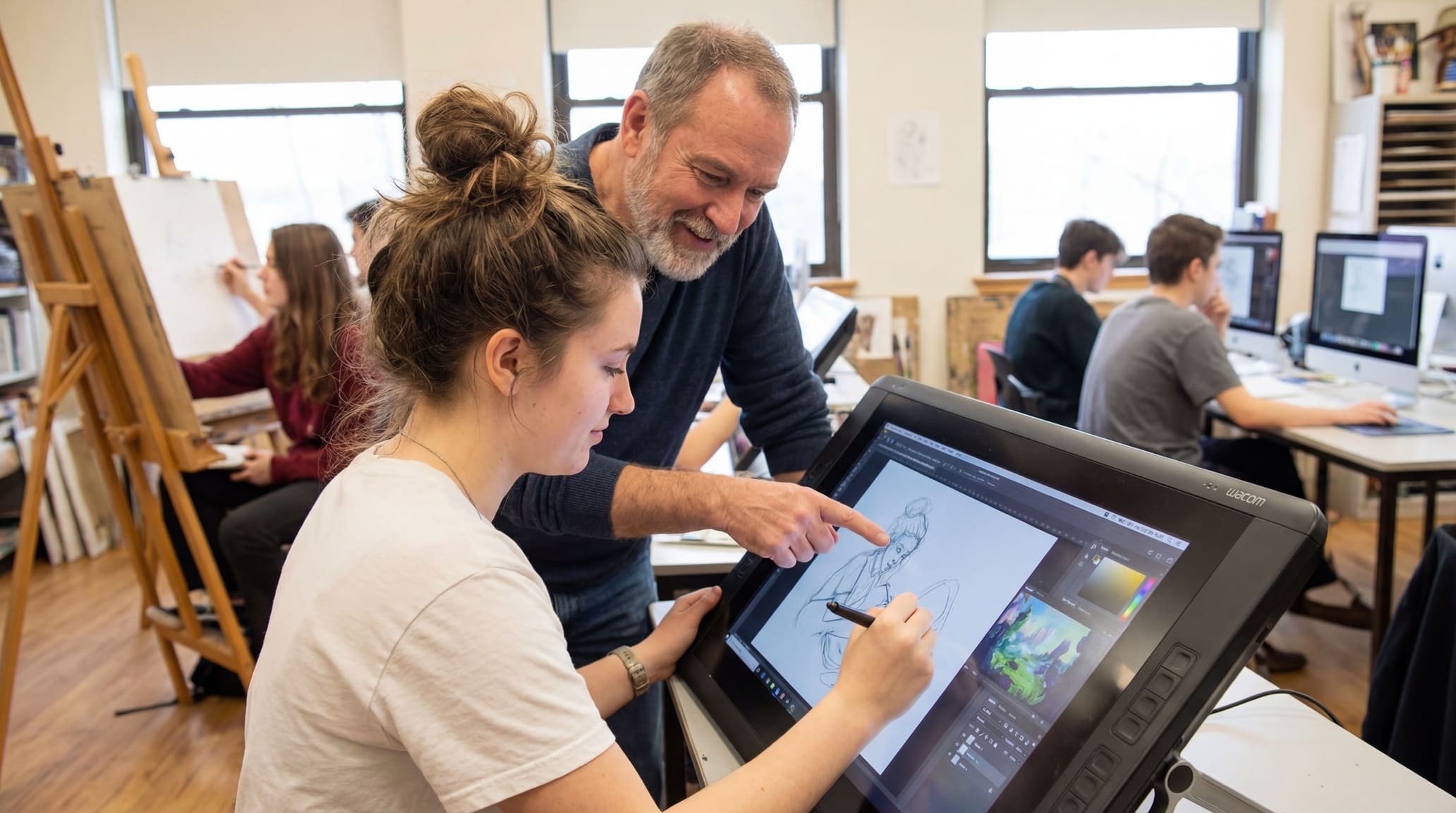
Our curriculum is designed to help students bridge the gap between observation and expression. Through project-based learning, students build aesthetic judgment and the confidence to present their ideas to the world.
Whether a student aspires to be a professional artist or a creative leader in another industry, art education at Harper ensures they become more open, sensitive, and innovative thinkers .
A strong art education should help students move through a meaningful developmental sequence: from observation, to expression, to a clearer creative identity.
At Harper, this means students are encouraged to develop aesthetic judgement, understand visual language, and gradually find stronger ways of presenting their own ideas. The aim is not to produce formulaic work, but to help students become more articulate in what they see, what they think, and what they want their work to communicate.